


Waataa Chat - Party & Live
4.153.00 Reviews
App Specs
- Version
- 1.0.26
- Updated On
- License
- Free
- Downloads
- 100,000+
- Developer
- Hair Dance
- Categories
- Social
- Platform
- Android
Screenshots



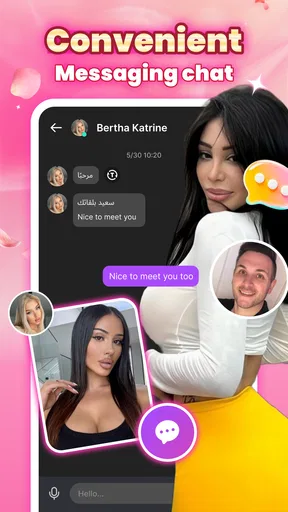


 Analysis by AppCompare
I tried Waataa Chat - Party & Live as a social app built around live video conversations with people from different places. My first impression was that it aims for a more immediate, face-to-face experience than a normal social feed. Instead of spending most of your time scrolling through polished posts, the appeal is the possibility of joining a live interaction and meeting someone beyond your usual circle.
That focus makes it easy to understand, but it also sets a high bar. A live video app is only enjoyable when conversations feel comfortable, discovery feels worthwhile, and the user can decide quickly who deserves their attention. In my experience, Waataa Chat is most interesting for adults who actively want spontaneous social contact rather than a carefully managed messaging space. It is less convincing for anyone looking for a quiet, private, or highly structured way to communicate.
How the free access affects the experience
Waataa Chat is free to download, which makes trying it fairly straightforward. The app is listed for mature users aged 17 and over, and that is an important part of the decision rather than a minor label. Live video interaction can be unpredictable, so I would treat the age guidance seriously and avoid viewing the app as a general-purpose chat tool for younger family members.
The developer is Hair Dance, and the app is currently at version 1.0.26. It was released on April 30, 2025, so I approached it as a relatively young service rather than a long-established social network with years of refinement behind it. That does not automatically make it poor, but it does mean I would keep expectations practical: the experience may depend heavily on the people available at the moment you open it.
There are in-app purchases priced from $2.99 to $99.99 per item. That range matters because “free” describes access to the app, not necessarily every part of the social experience. I would begin without spending anything, learn what the free path actually lets me do, and only consider a purchase if it solves a specific problem I have already encountered. Buying early, simply because a live conversation feels exciting, would be an easy way to spend more than intended.
The useful distinction is between free access and paid value. Free access gives you a chance to judge whether the atmosphere, pace, and available conversations suit you. Paid items may be appealing to some users, but the listed prices alone do not prove that they improve the quality of the people you meet or guarantee more meaningful exchanges. I would therefore see purchases as optional extras, not as a requirement for deciding whether the app belongs in my daily routine.
That approach is especially sensible here because the app has an average rating of 4.1 from around 520 ratings, alongside 53 written reviews. Those figures suggest a generally positive reception with enough feedback to make the app worth investigating, but not enough to remove all uncertainty about how it will feel for every type of user. I would read the rating as encouragement to test it, not as a promise of consistently excellent conversations.
Worth Reading Before You Choose

EA SPORTS FC Mobile 26 Is a Bigger Football Game, but It Takes Time

Flipboard Shows What News Apps Must Do Beyond the Feed

Switching to Android Auto Means Rethinking Your Driving Routine

Google Calendar Makes a Crowded Week Easier to Manage

Ludo King Makes the Most of the Minutes Between Plans

Baby Panda World Brings Quick Play to Modern Phones, but Its Game Library Feels Busy
What the app is trying to do differently
The central idea is simple: live video chat with global friends. In practical terms, that places Waataa Chat closer to spontaneous social discovery than to a traditional messenger. A normal messaging app works best when I already know the person, while a conventional social network lets me consume updates at my own pace. Waataa Chat asks me to be more present, because a live exchange is harder to treat as background entertainment.
That immediacy is its clearest strength. Video can make a short interaction feel more human than a string of anonymous text messages, and meeting people from other regions can add variety to a routine that otherwise stays inside the same local or online circles. For someone who enjoys quick introductions, casual conversation, and the possibility of an unexpected connection, the format has genuine appeal.
It also changes the cost of attention. With text, I can answer later, edit my words, or leave a conversation open while doing something else. With live video, I need to decide whether I am ready to participate now. I found that this makes the app more engaging when I have a clear window of free time, but more awkward when I only want a few quiet minutes of browsing.
A realistic use case would be an evening when I have finished work but do not want to commit to a long group call. I could open the app, spend a short period exploring the live social space, and decide whether a conversation feels natural enough to continue. That is a better fit than opening it during a crowded commute, in a shared office, or while multitasking, because video chat needs attention and a suitable setting.
Small habits that make live conversations easier
My first practical tip is to set a time boundary before opening the app. Live social services can encourage one more conversation even when I planned to stay briefly. Deciding in advance that I will check in for a particular period helps me judge the experience instead of drifting into it. This is also useful before considering an in-app purchase: I want to know whether I return voluntarily, not whether a one-off interaction created a burst of excitement.
A second tip is to treat the camera environment as part of the experience. A quiet room, a stable position for the phone, and a background I am comfortable showing can make a bigger difference than a clever opening line. If I am not ready to appear on camera, a text-first messenger is probably a better choice for that moment. Waataa Chat’s live format rewards preparation more than ordinary scrolling does.
A third insight is to judge conversations by consistency rather than novelty. Meeting someone from another country can be interesting, but a different location does not automatically mean the exchange is respectful, safe, or worth continuing. I would look for basic signs of mutual interest: does the other person listen, respond naturally, and respect a change of subject or a decision to leave? If not, the global aspect has no real value.
I would also avoid sharing personal details too quickly. A live face and voice can create a false sense of familiarity, especially when the conversation feels friendly from the beginning. I would keep early chats general and avoid revealing information that could identify where I live, work, study, or spend time. That is not a criticism unique to this app; it is a sensible boundary for any service centered on meeting unfamiliar people through video.
Where the free experience may feel limited
The main trade-off is that the quality of a live social app depends on the available community. Even a well-designed interface cannot manufacture a good conversation if the people online at that moment are not a match for my interests, mood, or communication style. This makes the experience less predictable than a private messenger, where I choose the contact in advance.
There is also a social pressure that does not exist to the same degree in a text feed. I may feel expected to respond immediately, keep my camera ready, or continue a conversation simply because it has started. For some users, that energy is the whole point. For others, it can turn a supposedly casual app into work. I would skip Waataa Chat if spontaneous face-to-face interaction makes me uncomfortable even after reasonable privacy precautions.
The mature age rating is another meaningful trade-off. It signals that the app is not something I would recommend casually to teenagers below the stated age or to families searching for a broadly child-friendly social space. Adults should still use personal judgment, because an age label does not make every conversation suitable or guarantee that every interaction will match personal expectations.
The purchase range creates a second kind of friction. A low-cost item may feel easy to justify, while the upper end of the range is a much more serious commitment. Since the app is free to start, I would not connect spending with social success. If a user feels that they must pay to make conversations worthwhile, that is a reason to pause and reassess rather than automatically buying more.
This is where Waataa Chat differs from familiar alternatives. A standard messenger is better when privacy, reliability, and known contacts matter most. A large social network is usually better for following people over time and choosing when to respond. A video meeting tool is better for planned conversations with a fixed group. Waataa Chat makes more sense when the goal is immediate social discovery and I accept that the result may vary from one session to the next.
Who is likely to get real value from it
I can see clear value for adults who enjoy meeting unfamiliar people, prefer seeing and hearing someone rather than exchanging only text, and have enough patience to leave an unproductive conversation without taking it personally. It may also suit someone who wants a social activity that does not require arranging a formal appointment with friends. The live format can make a short free evening feel more interactive than passively watching content.
People who are curious about conversations across borders may find the concept especially appealing. Still, I would keep the goal modest. The strongest outcome may be a pleasant brief exchange, not an instant friendship or a dependable international social circle. Approaching it with that expectation protects the fun and prevents the app from feeling disappointing when a session is ordinary.
It is also a reasonable option for someone comparing social apps without wanting to pay upfront. Because the download is free, I can test the atmosphere before deciding whether it deserves regular use. That free entry is the most defensible part of its value proposition: it lowers the risk of trying the format, while leaving spending as a personal choice.
On the other hand, I would recommend skipping it if I mainly want to message close friends, keep conversations asynchronous, or avoid showing my face. I would also choose a different category if I need dependable moderation, a carefully organized community, or a professional setting. Waataa Chat is not a replacement for every communication tool; its purpose is narrower and more spontaneous.
My buy-or-skip verdict
I would try Waataa Chat without paying first, particularly if live video discovery sounds more appealing than another scrolling feed. The free entry gives enough room to decide whether the people, pace, and social tone work for me. I would use it in a private, comfortable setting, keep early conversations general, and leave quickly when an interaction feels pushy or uninteresting.
I would not treat the optional purchases as a shortcut to better relationships. The listed cost can reach $99.99 per item, so the sensible rule is to spend only after I understand exactly what I am receiving and have already established that I enjoy returning to the app. If the free experience does not feel worthwhile, paying is unlikely to fix the underlying mismatch.
Overall, I see this as a focused social experiment rather than an essential communication app. Its best quality is the directness of live video and the chance to encounter people outside my normal circle. Its biggest weakness is the same thing: the experience depends on unpredictable human interaction and asks for more attention than ordinary social browsing.
My recommendation is to try it free, keep expectations realistic, and skip purchases unless they offer clear personal value. For adults who want spontaneous global conversation, that makes Waataa Chat worth a test. For anyone seeking calm messaging, familiar contacts, or a tightly controlled social environment, a conventional alternative will probably be the better choice.
Pros
- Easy way to join live rooms and meet people with similar interests.
- Party-style features make conversations more interactive than standard messaging.
- Supports spontaneous socializing without needing to arrange events in advance.
- Live format can help users discover new creators and communities quickly.
- Useful for staying entertained during short breaks or casual downtime.
Cons
- Public live rooms may include inappropriate or uncomfortable user behavior.
- Busy rooms can make it difficult for new users to get noticed.
- Some features or virtual items may require in-app purchases.
- Requires a stable internet connection for smooth live interactions.
- Privacy can be a concern when sharing voice
- video
- or personal details publicly.
FAQs for Waataa Chat - Party & Live
What is Waataa Chat - Party & Live?
Waataa Chat - Party & Live is a social entertainment app focused on live interaction, group conversations, and meeting new people online. After exploring its main features, the app appears designed for users who enjoy joining live rooms, chatting with participants, and taking part in a more spontaneous community experience rather than using a traditional private messaging service. Available features may vary by region and account status.
How does live chatting work in Waataa Chat - Party & Live?
The app generally lets users enter live chat rooms or social spaces where several participants can interact in real time. Depending on the room, you may be able to send text messages, react to conversations, follow other users, or participate through voice and other interactive tools. Before joining, review the room description and privacy settings, because conversations can be public and the available functions may differ between rooms.
Is Waataa Chat - Party & Live free to download and use?
Waataa Chat - Party & Live can typically be downloaded without an upfront charge, but free access does not necessarily mean every feature is free. Social live apps often include optional virtual gifts, premium items, coins, subscriptions, or other in-app purchases. Check the current Google Play or App Store listing for exact pricing, supported payment methods, and subscription terms before buying anything, especially if children may access the device.
Is Waataa Chat - Party & Live safe for meeting new people?
As with any live social platform, safety depends partly on how carefully you use it. Avoid sharing your address, phone number, passwords, financial information, or private photographs with strangers. Use the app’s blocking and reporting tools when necessary, and leave conversations that feel inappropriate or suspicious. Parents should also review age ratings, supervision options, and the app’s privacy policy before allowing younger users to create an account.
What permissions and account information does the app require?
The exact requirements can change according to the device, app version, and features you choose to use. Waataa Chat - Party & Live may request account details such as a nickname, profile image, or login information, while live functions could require microphone, camera, notification, or photo-library access. Grant only permissions that are necessary for the features you want, and review the privacy policy to understand how profile and activity data are handled.


